First flowers: Cretaceous bloom that changed the planet
Flowering plants appeared 130 million years ago and now make 90 percent of plants by teaming with bees.
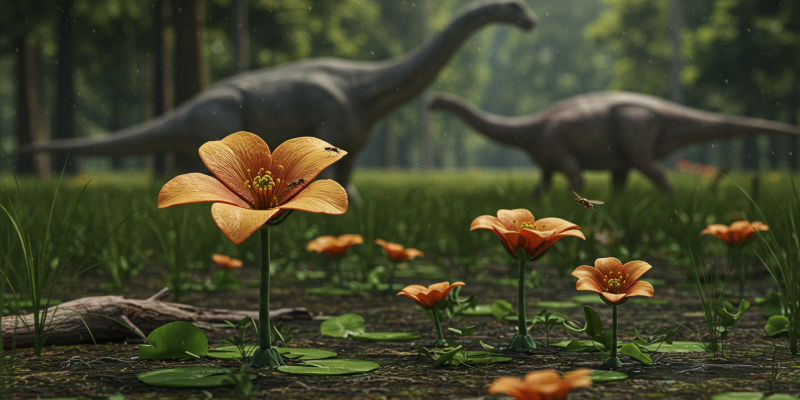
A fast bloom 130 million years ago
Around 130 million years ago Archaefructus in China floated in lakes with tiny 2-centimeter flowers, reproducing in weeks while conifers needed years, a speed advantage that proved decisive.
Early petals were small and greenish, yet closed carpels protected seeds, vessels moved water 3 times faster and insects carried pollen 10 kilometers between plants.
Bees, fruits and world takeover
Bees appeared 120 million years ago and co-evolved with flowers, with 20000 bee species today visiting 350000 flowering species that dominate 90 percent of all 400000 plant species.
Fruits bribed dinosaurs and mammals to spread seeds in dung over 5 kilometers, while wheat, rice and corn now feed 8 billion people from just 3 grass flowers.
- First flowers 130 million years ago in China.
- Archaefructus had 2 cm tiny blooms.
- Bees 20000 species co-evolved 120 million years ago.
- Flowering plants are 90 percent of plants.
- 3 grasses feed 8 billion people today.