Jurassic vs Cretaceous: How the Two Periods Differ
Jurassic built giants and first birds while Cretaceous added flowers, T rex and a final asteroid.
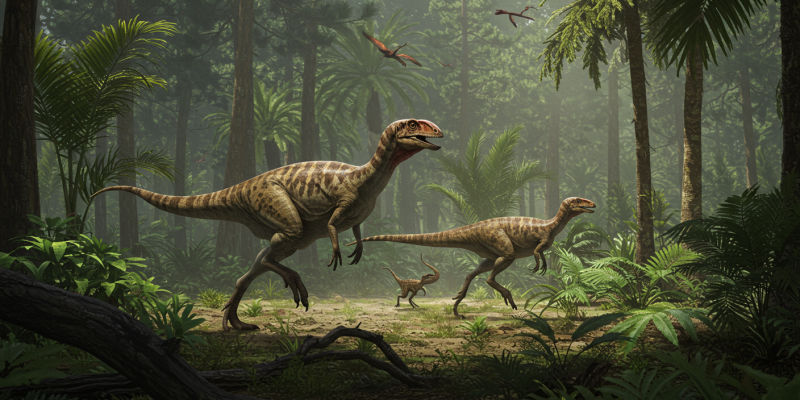
What defined the Jurassic world?
The Jurassic lasted from 201 to 145 million years ago, 56 million years of warm seas and splitting continents. Giant sauropods like 25-meter Brachiosaurus dominated land, while 150-million-year-old Archaeopteryx took first short flights.
Oceans held 15-meter plesiosaurs and air had pterosaurs with 10-meter wingspans. Forests were ruled by conifers and cycads with no flowers, so plant-eaters ground tough needles with 100 spoon-shaped teeth.
Why was the Cretaceous so different?
The Cretaceous ran 145 to 66 million years ago, 79 million years with flowering plants spreading to 80 percent of flora. Duck-billed herds of 1,000 animals grazed new leaves while 12-meter T. rex and sickle-clawed raptors hunted them.
Continents split into isolated islands, creating dwarf and giant species only 2 meters apart in size range extremes. It ended 66 million years ago when a 10-kilometer asteroid struck Mexico, wiping out 75 percent of species.
- Jurassic 201-145 million years ago 56 long
- First birds appeared 150 million years ago
- Cretaceous 145-66 million years ago 79 long
- Flowering plants reached 80 percent flora
- Asteroid 10 kilometers ended era 66 ago