Mesozoic era: Triassic, Jurassic, Cretaceous in one guide
From 252 to 66 million years ago dinosaurs ruled a breaking Pangea until an asteroid ended the era.
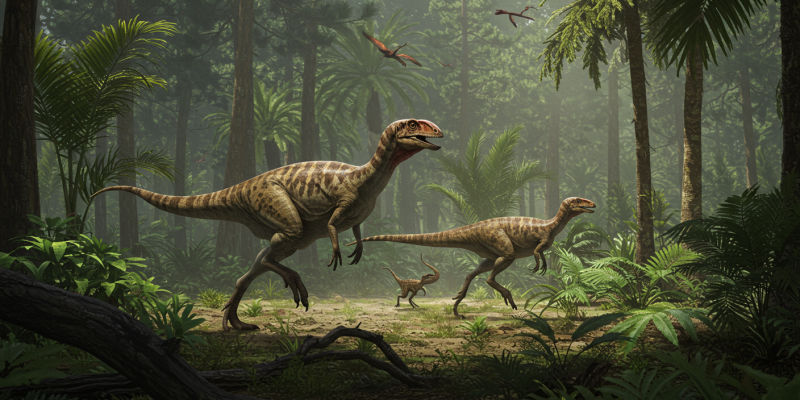
Pangea breakup and dinosaur rise
The Mesozoic lasted from 252 to 66 million years ago, 186 million years split into Triassic, Jurassic and Cretaceous periods. It starts after the Permian extinction with one supercontinent Pangea, which cracked into Atlantic pieces while 30-meter sauropods and 9-ton tyrannosaurs evolved.
Dinosaurs shared skies with pterosaurs of 10-meter wingspan and seas with 15-meter mosasaurs and long-neck plesiosaurs. The climate was hot, sea level 100 meters higher, and deserts inside Pangea stretched 5,000 kilometers wide.
Birds, mammals, flowers and asteroid
The first crow-sized Archaeopteryx flew 150 million years ago, small shrew-like mammals hid in shadows, and 125 million years ago the first 1-centimeter flowers bloomed. By the late Cretaceous tyrannosaurs, triceratops herds of 20 animals and duck-bills filled lush floodplains.
The era ended 66 million years ago when a 10-kilometer asteroid hit Chicxulub, Mexico, releasing billion-bomb energy and a 6-month darkness. About 75 percent of species died, all non-bird dinosaurs vanished, and mammals inherited the Earth.
- Mesozoic: 252 to 66 million years
- Periods: Triassic, Jurassic, Cretaceous
- Pangea: one land splits to Atlantic
- New: birds 150 M, flowers 125 M
- End: 66 M asteroid, 75 percent extinct