Tiktaalik: the fish with wrists that crawled ashore
A 375-million-year-old predator in Canada had fins with wrists, a neck and lungs, bridging fish and tetrapods.
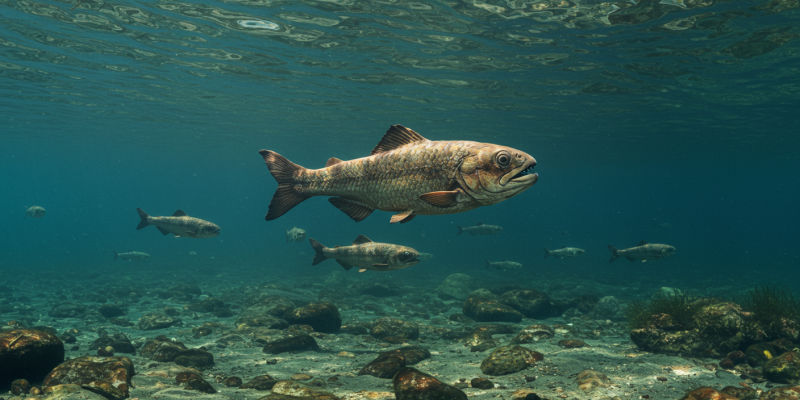
Predicted, then found in 2004
Neil Shubin predicted a 375-million-year-old gap fossil in Arctic Canada and in 2004 found Tiktaalik, a 3-meter crocodile-like fish with flattened head, sharp teeth and gills plus lungs.
Expedition teams spent 5 summers on Ellesmere Island 1000 kilometers from the pole, screening tons of rock until three skeletons emerged from Devonian river mudstones.
Wrists, neck and a walk in shallows
Tiktaalik carried fins with shoulder, elbow and wrist bones able to prop 150 kilograms in shallows, plus a movable neck, ribs and eyes on top for ambush hunting.
It could not walk on land yet, but push-ups in 1-meter-deep streams prefigured limbs, and 10 million years later Acanthostega and Ichthyostega grew digits and conquered shore.
- Age 375 million years in Canadian Arctic.
- Length 3 meters with flat crocodile head.
- Fins had wrist bones for propping.
- Had both gills and lungs plus neck.
- Found in 2004 after 5 Arctic summers.