Ice ages explained: why glaciers come and go
Over the last 2.6 million years ice sheets advanced every 100 thousand years, peaking 20 thousand years ago.
Orbital rhythms and 3-kilometer ice
The Quaternary ice age began about 2.6 million years ago. Tilt and orbit cycles of 41 and 100 thousand years change sunlight by 10 percent, letting snow survive summers and build sheets up to 3 kilometers thick.
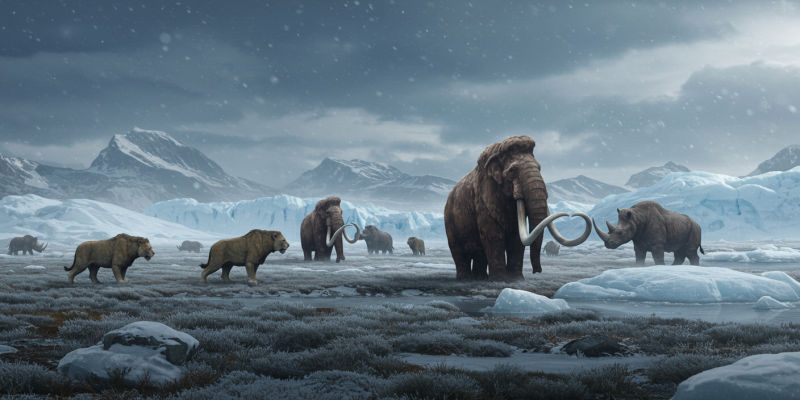
At maxima ice covered about 30 percent of land, about 35 million square kilometers. Sea level fell 120 meters, woolly mammoths weighing 6 tonnes and 4-meter tusks roamed steppes with bison and giant deer.
Last thaw, now and next freeze
The last glacial maximum peaked about 20 thousand years ago with 4-kilometer ice over Canada. By 11 thousand years ago warming of 5 degrees melted sheets, seas rose 1 centimeter yearly and forests reclaimed half of Europe.
We live in the Holocene interglacial, 11 thousand years warm and stable. Without human warming the next freeze would start in about 50 thousand years, but carbon delays it by at least 100 thousand years.
- Ice age started 2.6 million years ago.
- Cycles every 41 and 100 thousand years.
- Ice up to 3 kilometers thick.
- Last maximum 20 thousand years ago.
- Next freeze in about 50 thousand years.