Ordovician period: sea life boom before the ice
From 485 to 444 million years ago seas filled with trilobites and nautiloids before glaciers triggered a huge extinction.
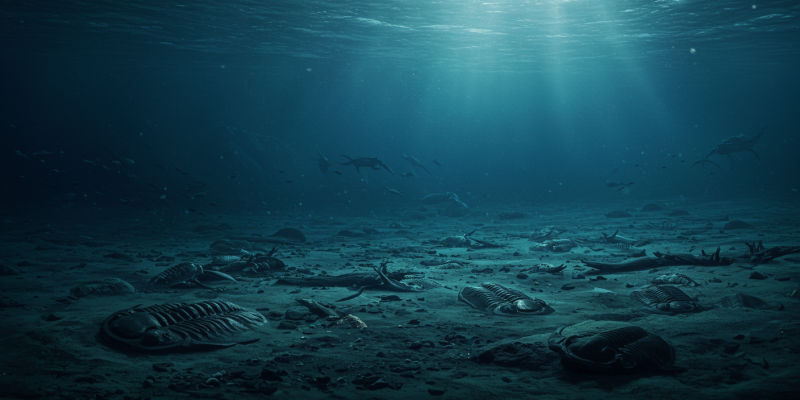
A world of shallow tropical seas
The Ordovician lasted from 485 to 444 million years ago, about 41 million years. Most continents lay near the equator and were covered by warm shallow seas full of reefs and muddy bottoms.
Trilobites, brachiopods, graptolites and giant nautiloids up to 6 meters long ruled the oceans. Jawless fish up to 30 centimeters swam among them, while land was almost bare except for tiny mosses.
Ice caps and the second largest extinction
Around 444 million years ago Gondwana drifted over the South Pole and thick ice sheets grew. Sea level fell by about 100 meters, draining shallow habitats and cooling tropical waters by 5 degrees.
About 85 percent of marine species vanished in two pulses separated by 500 thousand years. Reef builders and many trilobite families disappeared, but survivors later founded Silurian faunas in warmer refilled seas.
- Lasted 41 million years, 485 to 444 million years ago.
- Giant nautiloids reached 6 meters in length.
- Early jawless fish grew to 30 centimeters.
- Sea level fell by about 100 meters.
- About 85 percent of marine species vanished.