Permian extinction: the Great Dying killed 90% of seas
252 million years ago Siberian volcanoes wiped out 90 percent of marine life in the worst extinction ever.
What happened 252 million years ago
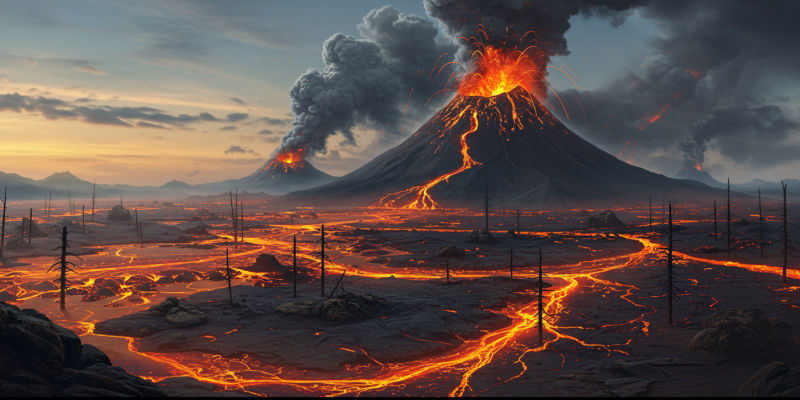
About 252 million years ago lava poured across Siberia, covering one million square kilometres in stacked flows kilometres thick. Eruptions lasted tens of thousands of years, injecting carbon dioxide, methane, sulfur and chlorine that heated the planet and poisoned air and rain.
Oceans warmed by about ten degrees, lost oxygen and turned acidic, dissolving shells and reefs within centuries. Roughly 90 percent of marine species and 70 percent of land vertebrate genera vanished, from trilobites and reef corals to mammal-like reptiles and giant amphibians.
Aftermath and slow recovery
Forests collapsed into fungal wastelands, with a famous spike of fossil spores marking rotting vegetation worldwide. Coal formation stopped for ten million years because peat swamps and trees were gone, and rivers ran wide and muddy without roots to hold soils.
Recovery took about ten million years, with disaster species like shrimp-like Claraia and pig-like Lystrosaurus dominating first. Only later did new reefs, dinosaur ancestors and modern conifers appear, showing how completely the Permian reset evolution.
- Date: 252 million years ago, end Permian
- Lava: Siberian Traps, one million square km
- Loss: 90 percent seas, 70 percent land
- Signal: global fungi and spore spike
- Recovery: about ten million years