Permian period: Pangea desert world before the dying
From 299 to 252 million years ago Pangaea deserts spread before volcanoes caused the greatest extinction.
One continent and vast deserts
The Permian lasted from 299 to 252 million years ago, about 47 million years. All land joined into Pangaea covering about 150 million square kilometers, with interior deserts stretching 5 thousand kilometers from coasts.
Mammal-like synapsids like Dimetrodon grew to 4 meters with a 1-meter sail for heat control. Conifers and drought-tolerant seed ferns replaced coal swamps as rainfall fell below 200 millimeters yearly inside Pangaea.
Siberian Traps and the Great Dying
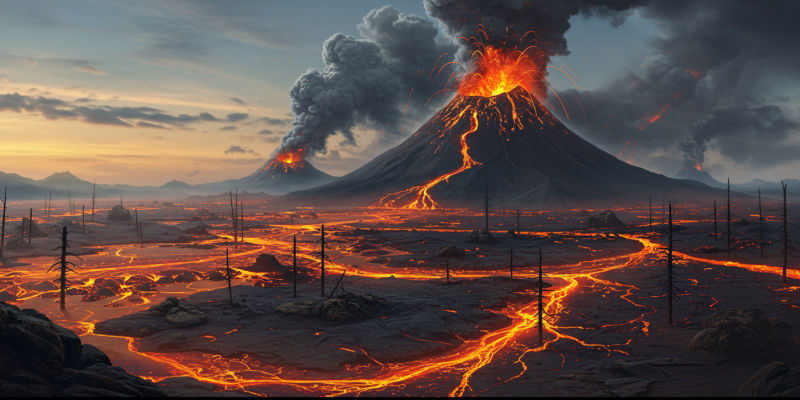
Around 252 million years ago Siberian Traps erupted about 4 million cubic kilometers of lava across 7 million square kilometers. Carbon dioxide rose sharply, oceans warmed by 8 degrees and oxygen collapsed in deep water.
About 90 percent of marine species and 70 percent of land vertebrates vanished within 60 thousand years. Reefs, trilobites and giant synapsids disappeared, leaving fungi and few disaster species to inherit empty Triassic landscapes.
- Lasted 47 million years, 299 to 252 million years ago.
- Pangaea covered 150 million square kilometers.
- Dimetrodon reached 4 meters with sail.
- Lava covered 7 million square kilometers.
- About 90 percent of marine species lost.