Where did water come from? Asteroids vs volcanoes
Oceans arrived by 4.4 billion years ago but hold only 0.02 percent of Earth mass, with 97 percent salty and undrinkable.
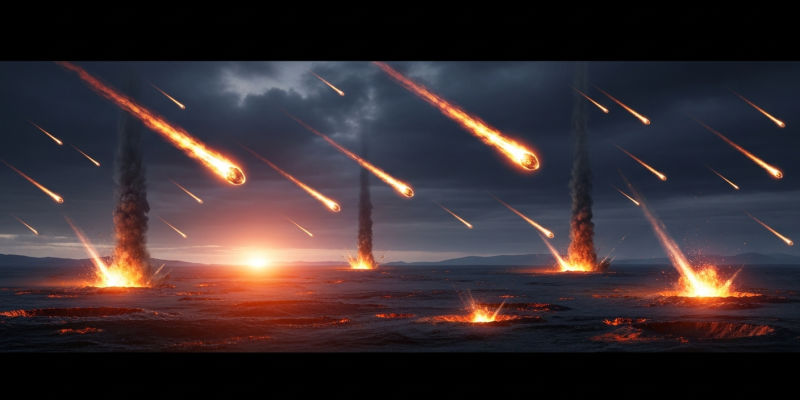
Volcanoes and asteroids both brought water
4.4 billion years ago zircon crystals show liquid oceans already existed only 150 million years after Earth formed. Volcanoes released steam that rained for millennia, while icy asteroids added water during heavy bombardment about 4 billion years ago.
Earth holds 1.4 billion cubic kilometers of water yet only 0.02 percent of planet mass. If spread evenly oceans would cover Earth 3 kilometers deep, but 97 percent is salty and only 3 percent fresh, mostly locked in ice.
Comets look guilty but fingerprints differ
Carbon-rich asteroids match Earth water fingerprints with same hydrogen ratios, while many comets carry twice as much heavy water. That mismatch points to asteroids, not comets, delivering most oceans between 4.4 and 3.8 billion years ago.
Water stayed because Earth sits in habitable zone where oceans neither boil nor freeze solid. Venus lost its water to space heat, Mars froze and lost air, while magnetic shield and gravity kept Earth wet for 4 billion years.
- First oceans by 4.4 billion years ago, zircons prove
- Total water only 0.02 percent of Earth mass
- 97 percent salty, 3 percent fresh, 2 percent ice
- Asteroid water matches, comets have double heavy water
- Habitable zone plus magnetosphere kept oceans liquid