Burgess Shale: Cambrian weird wonders of Canada
Canada's 508-million-year-old Burgess Shale preserves soft Cambrian animals in stunning detail.
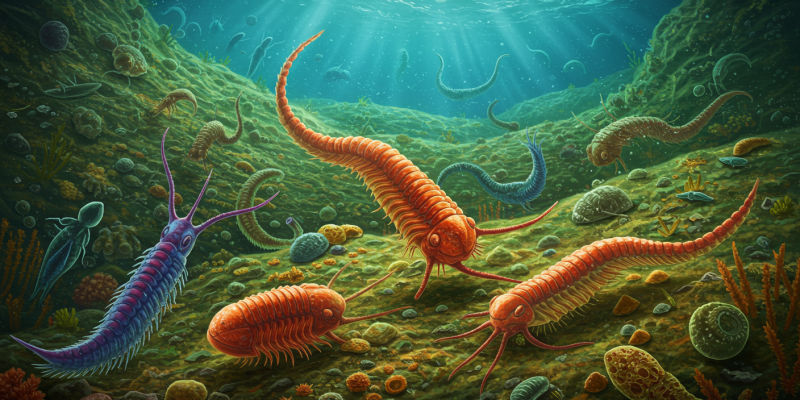
Walcott's 1909 discovery in the Rockies
In 1909 Charles Walcott discovered soft-bodied fossils high in the Canadian Rockies dating to about 508 million years ago during the middle Cambrian period exactly.
The shale quarry sits above 2200 meters elevation near Field town and workers split fine mudstone layers that buried animals quickly after underwater mudslides 508 million years ago.
Why soft bodies and weird wonders matter
Most fossil sites save only shells and bones, but Burgess Shale preserved guts, eyes, legs and gills, revealing Anomalocaris reaching 1 meter and Hallucigenia with spines and stilt legs clearly.
The site became a UNESCO heritage place in 1980 and protects over 200 animal species, showing rapid Cambrian diversification within about 20 million years around 540 to 520 million years ago.
- Age about 508 million years in middle Cambrian
- Found in 1909 by Charles Walcott team
- Elevation above 2200 meters in Rockies
- Over 200 species with soft tissues kept
- UNESCO listed in 1980 for protection