What Color Were Dinosaurs? Feathers and Melanosomes
Fossil melanosomes reveal dinosaur colors, from striped tails to iridescent black feathers.
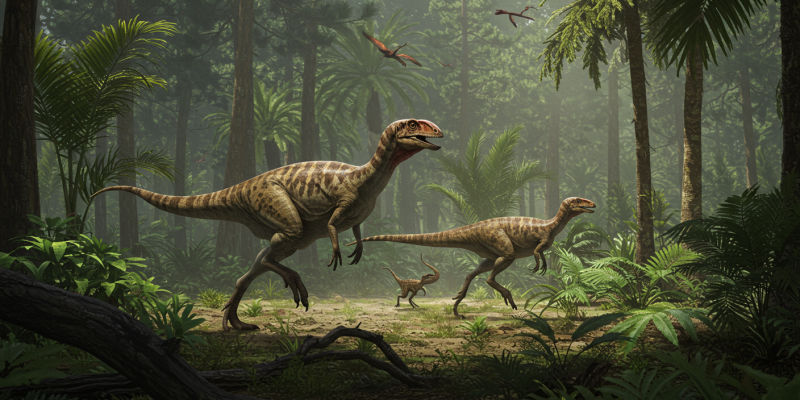
How do we know dinosaur colors?
Melanosomes are microscopic pigment sacs preserved in feathers and skin, with round shapes showing red tones and rod shapes showing black. By comparing them to modern birds, scientists rebuilt patterns in fossils from 160 to 120 million years ago.
Sinosauropteryx had an orange and white striped tail confirmed by round melanosomes. Microraptor carried black iridescent feathers like a starling, with narrow stacked melanosomes that created glossy blue-green shine for display.
Camouflage and display in feathered dinosaurs
Anchiornis, a crow-sized dinosaur from 160 million years ago, combined black body feathers with a red crest and white wing spots. Its four wings suggest display mattered as much as flight, with about 30-centimeter wingspan on each leg.
Psittacosaurus shows countershading with a dark back and pale belly, confirmed by pigment mapping across 120-million-year-old skin. This camouflage hid its 2-meter body from predators in forests, exactly like modern deer use shade blending.
- Sinosauropteryx had orange-white striped tail
- Microraptor had black iridescent glossy feathers
- Anchiornis had red crest and spotted wings
- Psittacosaurus used dark back pale belly camouflage
- Melanosomes studied in fossils 160-120 million years old