First forests: how plants conquered land 400 million years ago
Tiny Cooksonia 425 million years ago grew roots that broke rocks, made soil and filled air with oxygen.
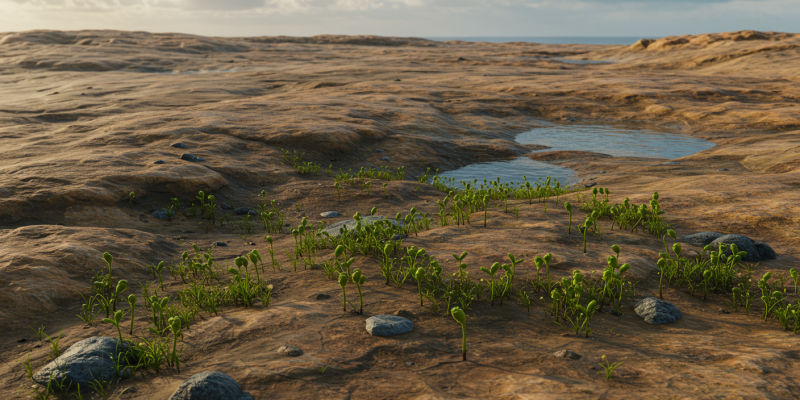
Cooksonia and the root revolution
Around 425 million years ago Cooksonia rose only 10 centimeters tall with forked stems and spore capsules, yet its rhizoids cracked rocks and trapped dust to build the first thin soils.
Roots pumped acids that dissolved stone 10 times faster, releasing phosphorus and iron, while fallen stems formed black shales that buried carbon and cooled the planet.
Giant horsetails and coal jungles
By 390 million years ago Gilboa forests in New York held trees 8 meters tall, and 50 million years later horsetails and clubmosses reached 30 meters with trunks 1 meter wide in swampy coal forests.
Plants raised oxygen from 12 to 30 percent, dropped carbon dioxide sharply and created shade, leaf litter and insects, turning bare rock into green continents that fed tetrapods.
- Cooksonia 425 million years old only 10 cm tall.
- Roots built first soils from bare rock.
- Gilboa trees 8 meters tall 390 million years ago.
- Coal giants reached 30 meters with 1 m trunks.
- Oxygen rose from 12 to 30 percent.