Cambrian explosion: why complex life burst 541 million years ago
About 541 million years ago animal life burst in 20 million years with trilobites and predators like anomalocaris.
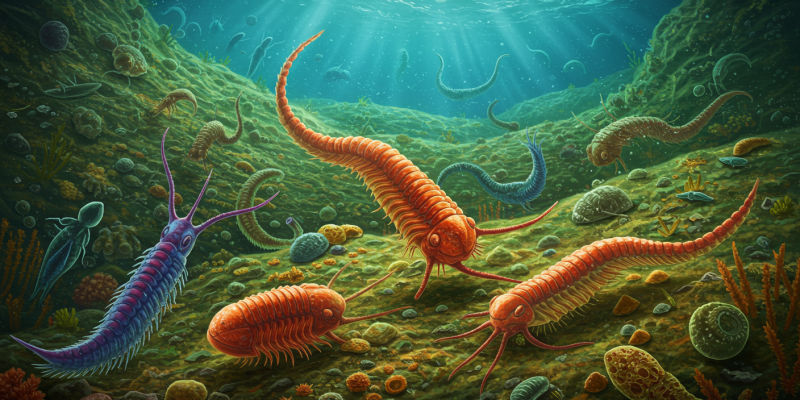
Twenty million years of invention
The Cambrian explosion began 541 million years ago and packed the rise of most animal phyla into just 20 to 25 million years. In Canada’s 508-million-year Burgess Shale, 200 species are preserved, from 5-centimeter trilobites to 1-meter anomalocaris with spiked arms and compound eyes.
Before this, only soft Ediacara blobs floated, but Cambrian seas gained shells, legs, jaws and 5-lens eyes in 10 million years. Oxygen rose to near 15 percent, plankton blooms fed chains, and burrows 2 centimeters deep show animals digging for the first time.
Why it happened so fast
Three triggers likely combined: oxygen crossing a threshold near 10 percent, the arms race of eyes and armor, and flexible Hox genes that build segments. Once one predator grew 30-centimeter eyes, prey needed shells 3 millimeters thick, and selection spun faster with each generation of 1 year.
Melting snowball glaciers dumped phosphorus, continents flooded shallow seas 2 million square kilometers wide, and calcium for shells became abundant. The result was permanent: every later fish, dinosaur and human reuses Cambrian eyes, legs, guts and brains invented then.
- Start: 541 million years ago
- Length: 20–25 million years burst
- Site: Burgess Shale, 508 million, 200 species
- Stars: trilobites, 1-meter anomalocaris
- Causes: oxygen, eyes race, Hox genes