Geological time scale explained: eons, eras and periods
Earth is 4.54 billion years old and its history is split into eons, eras and periods you can read like a calendar.
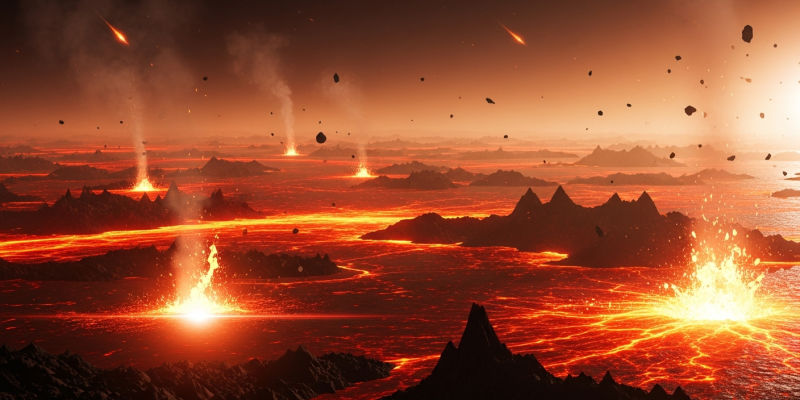
Four eons over 4.54 billion years
Earth is 4.54 billion years old, so geologists divide its history into eons, eras, periods and epochs, from longest to shortest. The four eons are Hadean, Archean, Proterozoic and Phanerozoic, and only the last 541 million years contain abundant fossils.
The international chart is maintained by the International Commission on Stratigraphy and updated when new dated rocks refine boundaries. Eon and era borders mark global upheavals, such as the oxygen rise 2.4 billion years ago or the Permian extinction 252 million years ago.
Calendar analogy and how to read it
Squeeze 4.54 billion years into one year: Earth forms January 1, first cells appear in March, oxygen builds by July and complex animals arrive in mid-November. Dinosaurs rule December 13 to 26, while all humans fit into the last 30 seconds of December 31.
To read the chart, start at the bottom with the oldest Hadean rocks and move upward toward today at the top. Colors mark eras and periods, numbers give boundary ages in millions of years, and fossil symbols show when trilobites, dinosaurs or mammals dominate.
- Earth age: 4.54 billion years
- Eons: 4 — Hadean, Archean, Proterozoic, Phanerozoic
- Phanerozoic: 541 million years ago to today
- Humans: last 30 seconds of year analogy
- Standard: international stratigraphic chart