Proterozoic eon: oxygen catastrophe and first complex cells
From 2.5 billion to 541 million years ago oxygen flooded the air and eukaryotes plus first multicellular life appeared.
Great Oxidation and eukaryotes
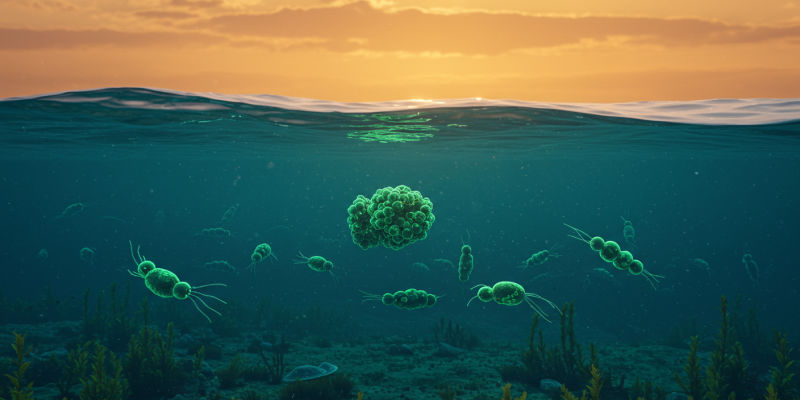
The Proterozoic ran from 2.5 billion to 541 million years ago, almost 2 billion years that built the modern world. Around 2.4 billion years ago cyanobacteria pumped so much oxygen that methane collapsed, iron rusted into banded formations, and most anaerobes died in the oxygen catastrophe.
Near 1.8 billion years ago an archaeon swallowed a bacterium that became the mitochondrion, creating eukaryotes with nuclei through endosymbiosis. These larger cells had 10 to 100 times more DNA, skeletons of proteins, and later chloroplasts from a second engulfed cyanobacterium.
Multicellular life and snowball end
By about 1.5 billion years ago simple red algae and 1.2-billion-year seaweeds show the first multicellular bodies tens of centimeters long. Sex, with mixed genes, appeared near 1 billion years ago and sped evolution, while 635-million-year Ediacara soft creatures spread on the seafloor.
The eon ended with two snowball Earth freezes around 720 and 635 million years ago, when ice reached the equator for 10 million years. Melting released nutrients, oxygen rose again, and predators with guts and eyes were ready for the Cambrian explosion.
- Proterozoic: 2.5 billion to 541 million years
- Oxidation: 2.4 billion years, banded iron
- Eukaryotes: 1.8 billion years, mitochondria
- Multicellular: 1.5 billion years algae
- Snowball: 720 and 635 million years ice