Chicxulub asteroid: 10 km rock that killed dinosaurs
66 million years ago a 10 kilometre asteroid hit Yucatan and ended 165 million years of dinosaur rule.
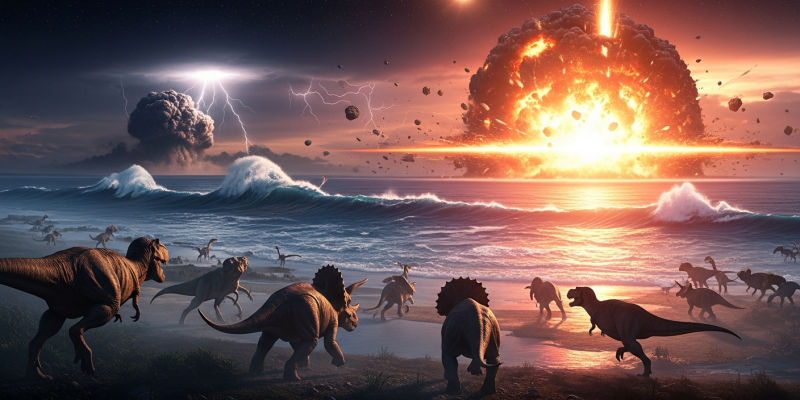
Ten kilometres that changed Earth
About 66 million years ago a 10 kilometre rock struck Yucatan, blasting a 180 kilometre wide crater now buried under limestone. Oil drillers found its gravity ring in 1978, while the global iridium layer found by Luis and Walter Alvarez had already pointed to space.
Impact energy equaled billions of Hiroshima bombs, triggering continental wildfires, magnitude 11 quakes and kilometre-high megatsunamis. Sulfur and dust blocked sunlight for years, freezing photosynthesis, while acid rain and global soot finished weak survivors across oceans and land.
Who died and who slipped through
About 75 percent of species vanished, including all non-avian dinosaurs, pterosaurs, ammonites and giant marine reptiles. Small feathered birds, mammals, frogs, turtles and crocodile relatives survived, many by sheltering underground, underwater or eating seeds and insects.
Within 300000 years ferns and palms recovered, then mammals grew from shrew size to wolf size in one million years. Without the impact, dinosaurs might still dominate, so our existence owes much to ten kilometres of rock arriving at the worst possible moment.
- Size: 10 km rock, 180 km crater
- When: 66 million years ago, Yucatan
- Clue: worldwide iridium layer, found 1978 ring
- Killed: 75 percent species, all big dinosaurs
- Survivors: birds, mammals, turtles, crocodiles